


1. What kind of tool is BigSpy?
BigSpy is an intelligence tool for finding advertising data across major platforms. You can use keyword searches to find precise ads, or use more than ten filters to find the latest and most popular e-commerce ads. BigSpy supports seven globally popular advertising platforms: Facebook, Instagram, YouTube, Pinterest, AdMob, Yahoo, and X(twitter).
The newly redesigned ECOM SPY module is an ad-based product selection module specifically for e-commerce users.
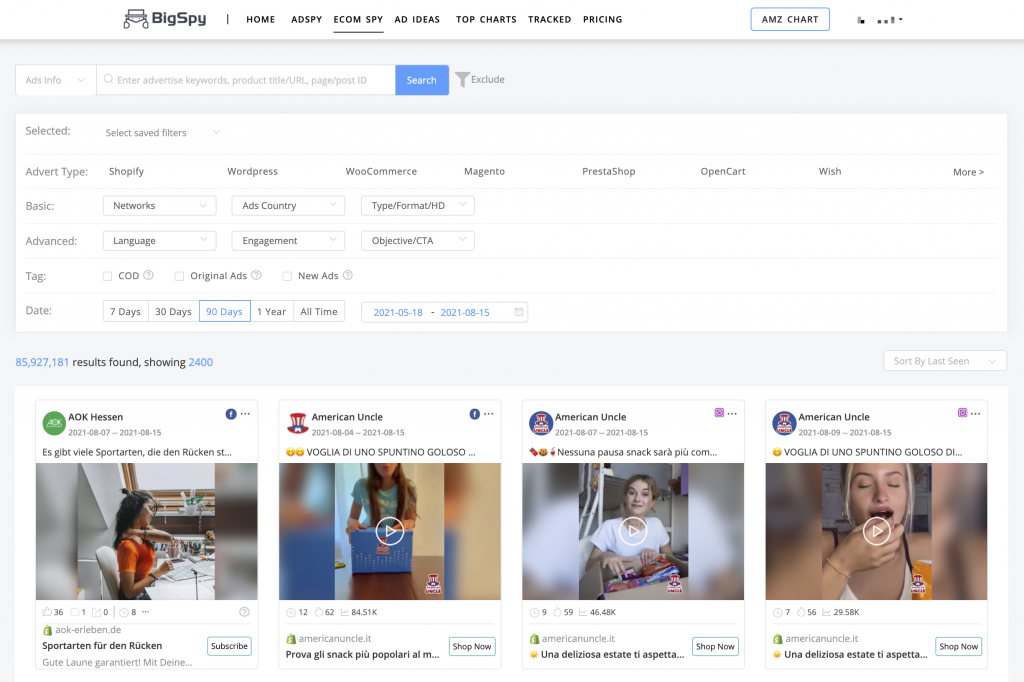
1-1. Three types of advertisers: independent stores, marketplaces, and social accounts
Advertiser types are mainly determined by the final landing page of an ad. Subcategories of independent stores are mainly defined by the website-building software used. The marketplace type already supports 18 mainstream platforms, including Amazon and AliExpress. Another advertiser type has e-commerce platform accounts as landing pages. As e-commerce advertisers increasingly focus on social media user engagement, these ads are attracting more attention too.
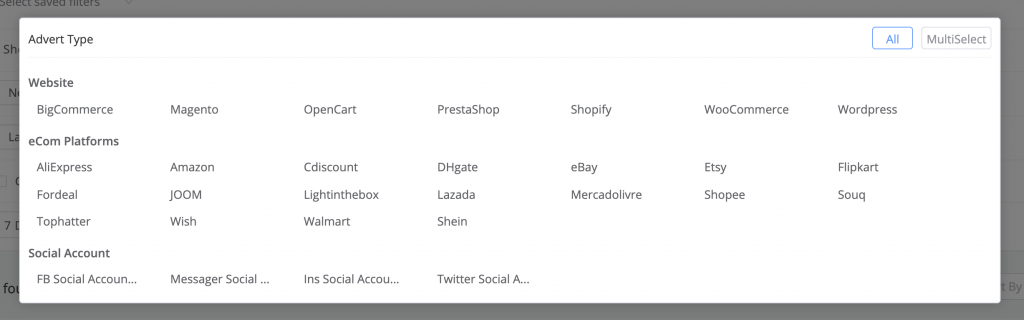
1-2. More than ten filtering functions
BigSpy's filters cover networks, countries, ad types, languages, engagement metrics, CTA types, COD tags, original creative tags, and more. You can freely combine filters to suit your needs.
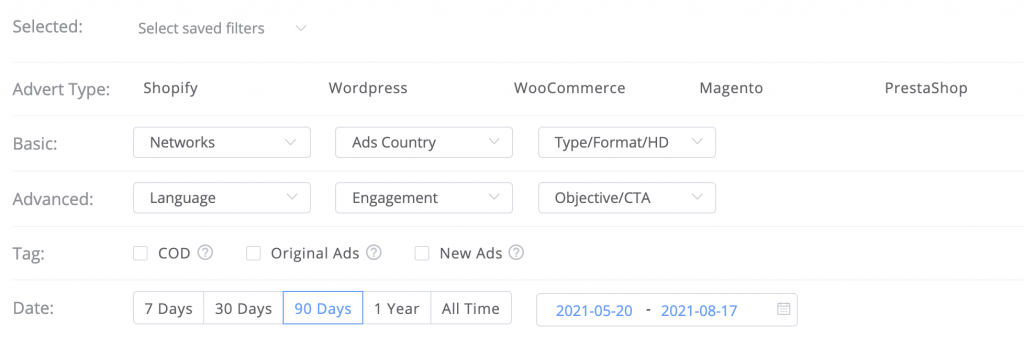
More product usage methods are introduced below. You can also register for a trial directly at https://bigspy.com/.
2. What can BigSpy help you gain?
- Be among the first to understand other e-commerce advertisers' strategies
- Be among the first to discover products promoted by other sellers
- Be among the first to discover popular e-commerce ads and find potential niche products
Beyond that, BigSpy is the world's largest ad creative library, with more than 600 million video or image creatives. Discover sellers' advertising and marketing strategies through their ads: hundreds of millions of ad records reveal how e-commerce sellers acquire customers across different ad platforms. You can also discover competitors' product selection strategies through their advertising, finding potential bestsellers and untapped business opportunities in ads that sellers are testing or have already validated.
3. Five product selection techniques!
3-1. Keyword search and exclusion
Unlike product searches on e-commerce platforms, searching e-commerce ads is not based on product categories but mainly on keywords. Keywords are very important in e-commerce ads: they need to distill selling points to attract users while also including popular keywords or copywriting phrases to support conversion rates.
For example, searching for “cleaning” returns mainly facial cleansing, rhinitis treatment, and pool-tool cleaning ads, with facial cleansing accounting for most results. If you focus on facial cleansing products, examine the keywords in these ads' names and copy. You can also use keyword exclusion to remove terms such as “pool” and “nose.” This method helps you find as many relevant e-commerce ads as possible.
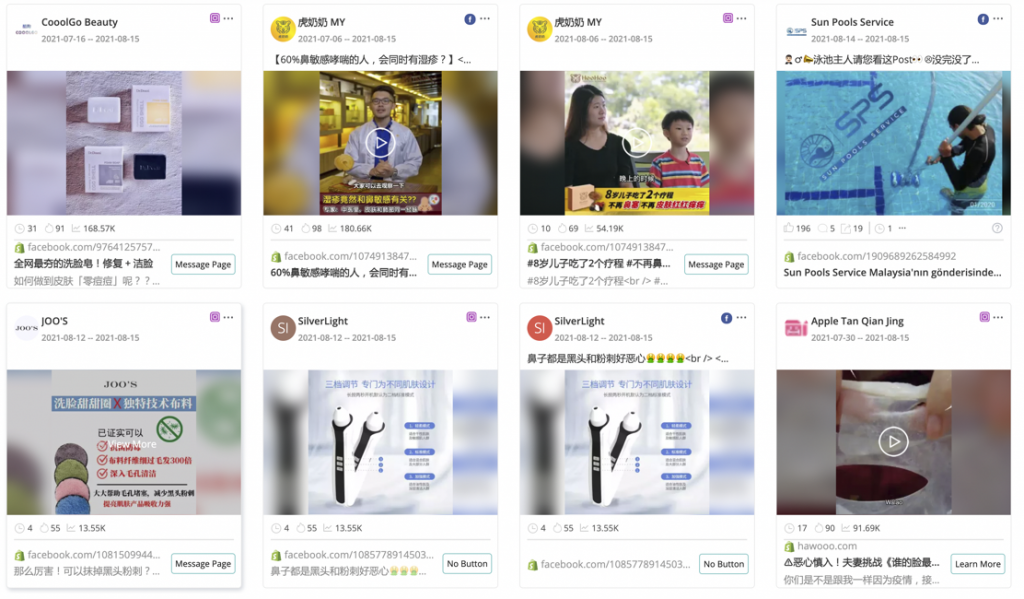
3-2. Check engagement on original-post ads
When sorting results for “cleaning” by likes, this post's ad has the most likes. It has run for only a short time but already achieved impressive numbers: not only 1K likes, but also a very high number of shares. Such ads are usually popular and generally perform well.

Meanwhile, its copy and creative images reveal that the strategy targets teenagers, with selling points such as clearing acne and zero pores. Users can examine creative details to learn more about other sellers' user acquisition or product selection priorities.

3-3. Combine filters
Combining filters such as advertiser, network, country, and the new-ad tag lets you see the latest ads running in the United States. You can then add keywords, engagement metrics, or other sorting methods to find your desired ads more precisely. Combined filters reveal ads for different markets and characteristics, helping you select potential bestsellers with different focuses.
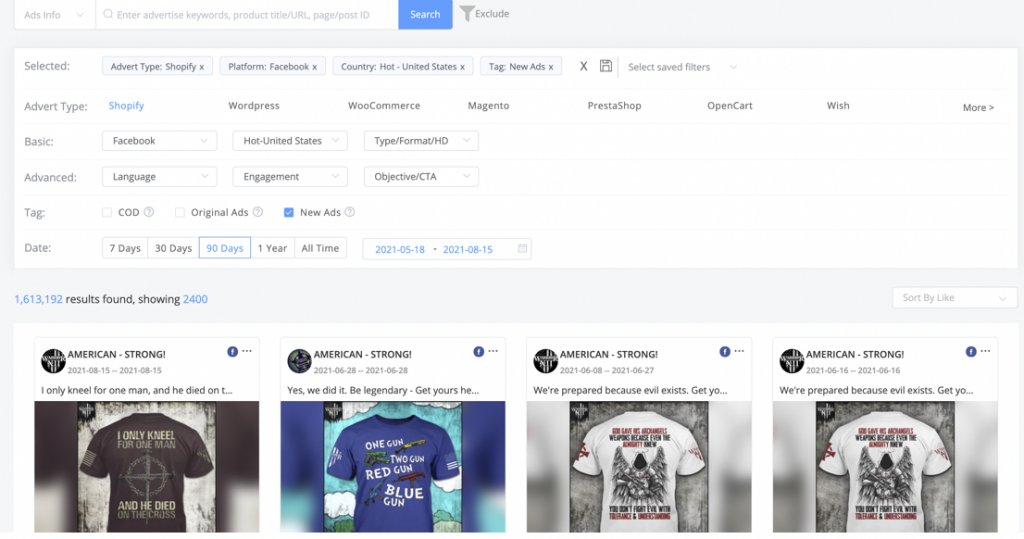
3-4. Follow products promoted by pages
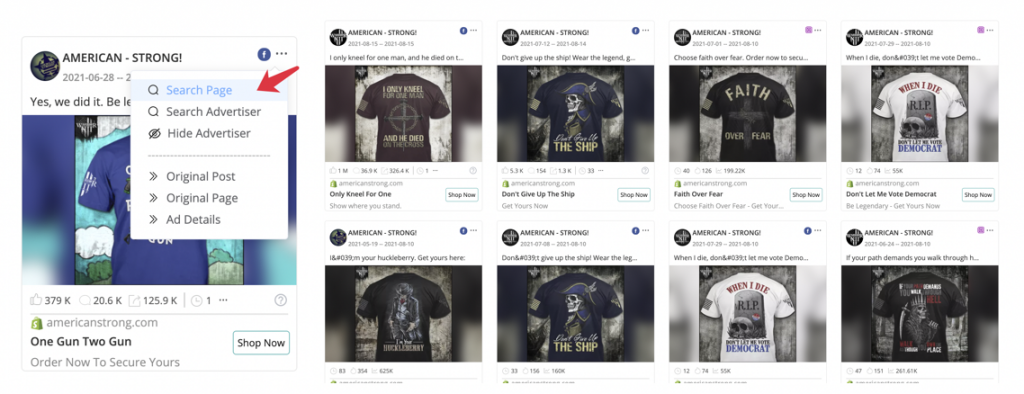
If an ad comes from Facebook, searching all related ads of a page lets you see every active ad under that page. A page is usually the main social media presence of a store or brand, so its ads reveal the product types and strategies the store has recently focused on.
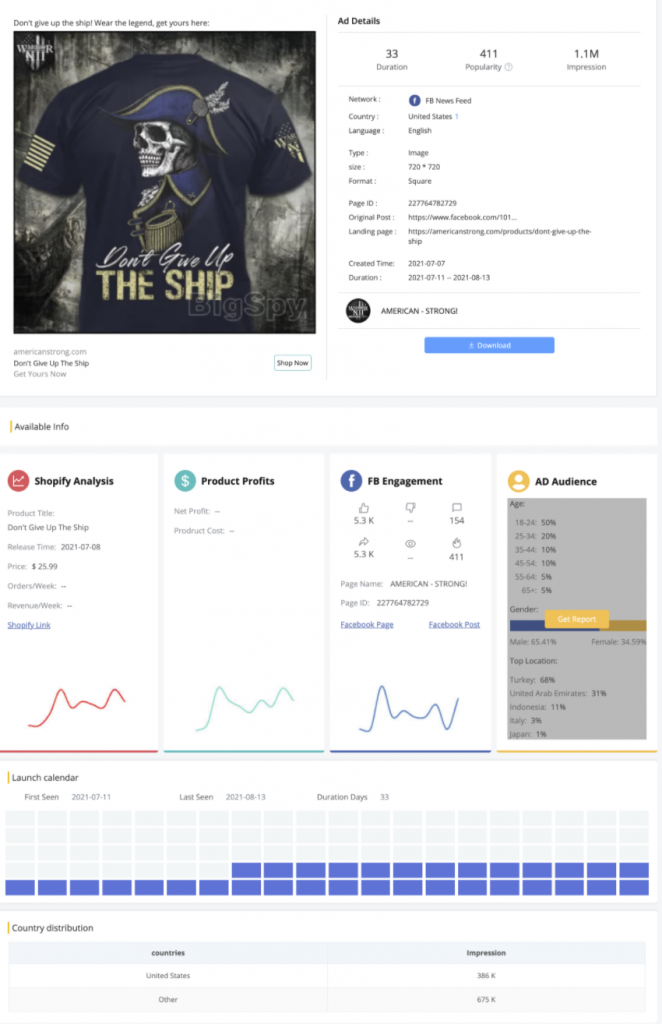
Second, the ad details page reveals related store data, such as store creation time and estimated sales in the past week. You can also obtain an audience report showing age, gender, countries, and more. This currently mainly relates to Shopify advertisers.
Third, detailed analysis supports viewing the ad's launch schedule, revealing when the advertiser began running it. If it has been running for too long, following the same product is not recommended; instead, focus on its related data analysis to understand the relationship between the advertising strategy and the product.
3-5. Country + COD ads
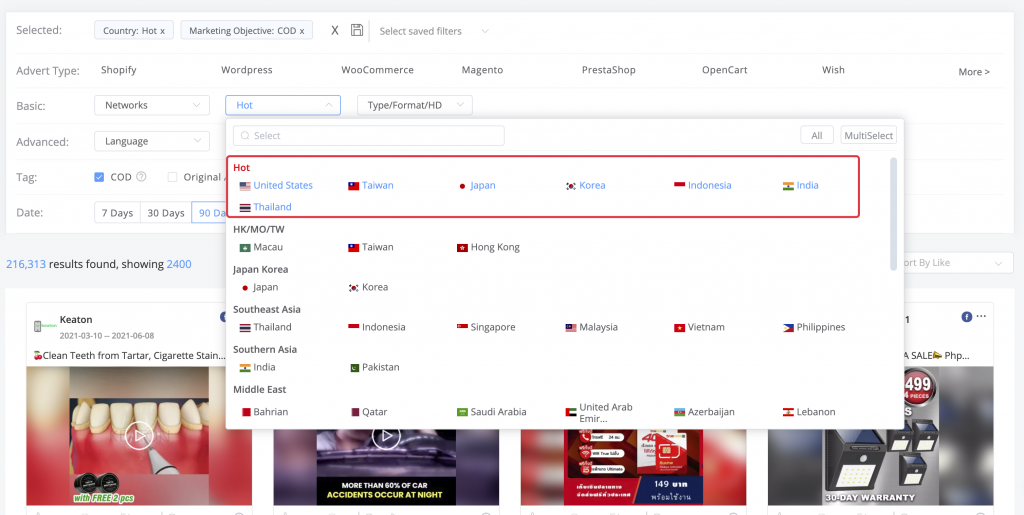
Cash on delivery is an e-commerce model with a relatively low barrier to acquiring users, making it popular worldwide. The system tags and groups ads with COD characteristics, so users can find them directly by clicking the button. We also recommend adding popular countries as filters to explore COD e-commerce ads in different countries.
4. Three essential tips!
- For mass-market goods, choose practical products
- For functional everyday products, highlight the selling points
- Find new bestsellers
Whatever the product type, broad appeal and practicality are the foundation. Only by meeting this foundation can you reach the broadest market. Build on it by emphasizing selling points, using copy and creative layouts to attract users, and identifying the pain points, trending topics, or novel features users cared about in the past or care about now. Finally, ad-based product selection is so important because ads are the first test of new products in the market. Watching ads for newly appearing products can therefore largely reveal a category's or competitor's product and advertising strategy.
I hope this article helps you earn more. Sending love!